







Imagine you have 100,000 pesos to start investing and want to distribute them among several Colombian companies or even allocate a portion to large U.S. companies, U.S. Treasury bonds, corporate debt, or emerging markets. Doing it asset by asset can be complicated and require much more money than you have.
ETFs aim to simplify that task. They are somewhat like buying a basket already assembled with different investments from which you can acquire a small stake. And the options available from Colombia are increasingly numerous, as by the end of the first half of 2026 there were 95 international ETFs available on the Colombian Global Market (MGC).
Interest in these vehicles is also reflected in the funds they are attracting. According to BlackRock, between January and July 2026, nearly 298 million net dollars flowed into ETFs with exposure to Colombian stocks, compared to outflows of about 50 million in 2025 and 42 million in 2024. Of the total received this year, around 173 million corresponded to local ETFs.
That universe has just expanded. BTG Pactual launched on September 10 TEVAICOL, the first Colombian stock ETF from a manager with a fully local operation, while the Government is preparing a second public debt ETF, this time based on short-term TES.
But what exactly is an ETF, why does it allow starting with small amounts, and what risks does it have? The explanation is simpler than its English name suggests, warn some consulted experts.
Diversify
ETF stands for Exchange Traded Fund, known in Colombia as stock funds. The Colombian Stock Exchange (bvc) defines them as open investment funds whose units are bought and sold electronically, in real time, similarly to a stock. They can replicate stock indices, fixed income instruments, or commodities.
The difference compared to buying an individual stock is easy to visualize. If someone puts all their money into one company, the result of their investment will depend on what happens with that company. With an ETF, they can distribute it among many firms through a single purchase.
And although that single move helps spread the risk (diversify), it does not mean eliminating it, since the price of an ETF can also rise or fall depending on the behavior of the assets it contains.
The development of these vehicles in Colombia began in July 2011 with the first Colombian stock ETF. A second arrived in 2014, and twelve years had to pass for a new one to appear, TEVAICOL, which brought the number of Colombian stock ETFs listed on the bvc to three.
The new fund gathers 13 stocks. According to Camilo Aristizábal, investment director of BTG Pactual Colombia, no company currently reaches a 25 percent stake, and each issuer enters with only one class of stock. Its management fee is 0.35 percent annually.
Portfolio adjustment
An ETF also does not buy assets and hold them indefinitely. Its composition can change according to the rules of the index it seeks to replicate.
HCOLSEL allows seeing this with a concrete example. This ETF follows the S&P Colombia Select, which gathers some of the largest and most liquid companies in the Colombian market. Its basket is reviewed every six months and requires a minimum of 14 stocks, as well as setting size, liquidity, and trading frequency requirements. No stock can represent more than 20 percent, and no sector can exceed 40 percent.
A recent case helps understand how this mechanism works. On September 11, S&P announced that Promigas will be excluded from the S&P Colombia Select, so from September 18 the basket will be composed of 17 stocks.
The reason lies in one of the conditions companies must meet to remain in the index. Although Promigas met most requirements, its average daily trading volume in the three months analyzed was 209 million pesos, below the required 300 million.
What does this imply for the ETF? Since HCOLSEL seeks to replicate that index, it must also adjust its portfolio. The fund holds a position in Promigas valued at 23,449 million pesos, whose liquidation would be equivalent to about 112 days of the average trading volume of that stock.
In simple terms, it is like removing one of the products from the basket and redistributing its content so that it continues to match the index it seeks to copy. The investor does not have to make that adjustment on their own: the fund does it.
Low amounts
Another advantage these investment alternatives offer is that large amounts of money are not required to participate; this is one of the attractions for individual investors.
For example, one unit of TEVAICOL cost around 26,000 pesos at the time of its launch, plus the commission charged by the intermediary used to buy it, which is 0.35 percent annually, the lowest among the three Colombian stock ETFs, according to BTG Pactual.
The Government wants to leverage that same characteristic to bring public debt closer to small investors.
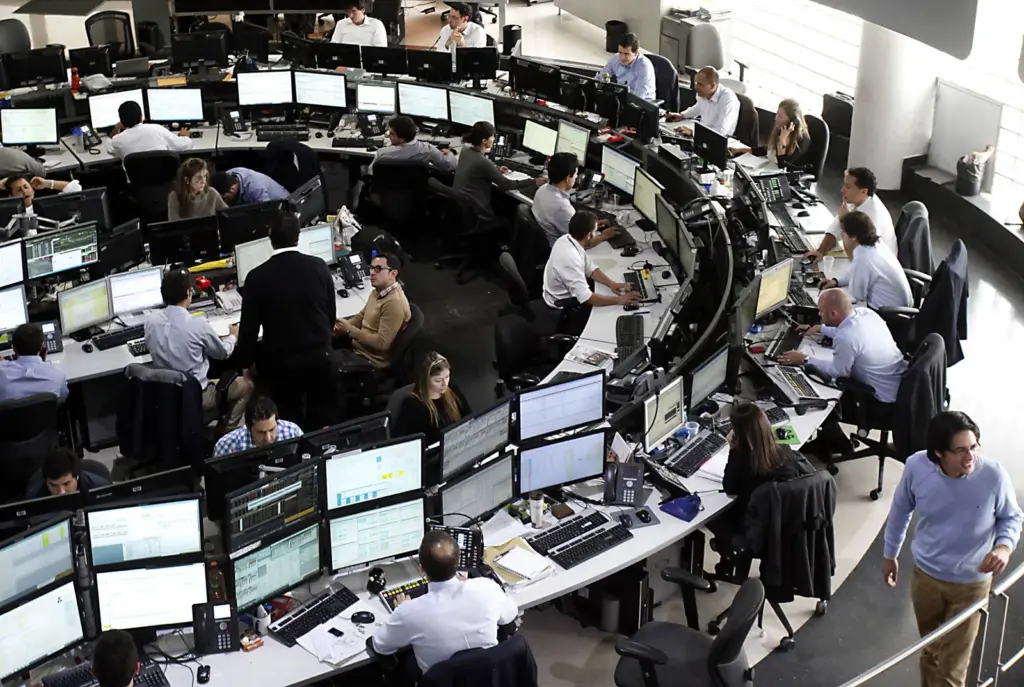
Colombia already has GxTESCol, which gathers different long-term TES in a single investment. One unit can be acquired for about 58,800 pesos, while participating directly in a public debt auction requires 500 million. More than 1,500 individual investors have already invested through this fund.
Now the Ministry of Finance is preparing a second TES ETF, but short-term, aiming to offer a liquid, transparent, and accessible alternative for those who prefer shorter-duration investments.
Returns
The variety that already exists allows understanding how far this market goes. Of the 95 international ETFs available on the MGC at the end of June, the most traded was one of U.S. Treasury bonds with maturities under one year, which concentrated nearly 44 percent of the volume of these funds.
It was followed by an ETF replicating the S&P 500, with 19.3 percent, and in third place was one linked to bitcoin, with 8.5 percent. Also among the top ten were vehicles of U.S. Treasury bonds of different maturities, corporate debt, emerging markets, technology stocks, and high-yield corporate bonds.
ETFs, therefore, are not synonymous with investing only in stocks. The basket can contain different asset classes and pursue different objectives.
Regarding profitability, it depends on what is inside the basket. If an ETF replicates a Colombian stock index, it will tend to follow its behavior, discounting costs and fees. If it contains TES, it will depend on those securities. And if it replicates the S&P 500, it will be exposed to the performance of that market.
Aristizábal points out that Latin American stock markets have yielded double digits on average in the last three years and that, in the case of Colombian stocks, the accumulated return for the period reaches triple digits.
HCOLSEL also allows observing how an investment of this type accompanies the performance of the stocks it replicates over the years. An analysis by Grupo Cibest on the performance of this ETF between May 2014 and August 2026 shows that its valuation has closely followed the trajectory of ICOLCAP, although with differences derived from the composition and weight of the different stocks and sectors in each basket.
Diversification with a single purchase, the possibility of starting with relatively low amounts, transparency about the assets the fund contains, trading during the trading session, and competitive costs are among the main advantages of ETFs.
But before investing, more than just asking how much an ETF is earning, it is advisable to understand what assets it holds, which index it seeks to replicate, how much it costs to invest, and how easy it will be to sell it when the money is needed.
Read more Report warns that the health system would have no margin to liquidate the intervened EPS