




To say that Gustavo Petro governed from X, formerly Twitter, is not an exaggeration. For four years this social network became the communication trench of the former president, the place that very early in his government became his main communication channel, not only with the citizens but also with his cabinet and officials. A recent calculation made by El Espectador estimated nearly 14,600 tweets issued from Gustavo Petro’s profile on X from August 7, 2022, to July 25, 2026.
That is an average of between 10 to 12 tweets daily. From the traditional work agenda between the media covering the Palace and the press teams of the Presidency, a dynamic that came from Iván Duque’s government and quickly withered, it shifted to a communication model in which Gustavo Petro’s X profile became the only window to the decisions, movements, and state announcements.
Through Twitter, Petro announced news, fired officials, attacked the courts, the media, businessmen, implemented narratives articulated with well-known digital activists to call for mobilizations or direct fierce campaigns against other institutions, political figures, and even foreign governments that caused serious diplomatic crises.
All that presidential communication dynamic is about to change with the new government. We will move from a one-person model, where we had a head of state who personally managed his X account, in a disorganized way and completely detached from any communication strategy of the Presidency, to an ordered, controlled scheme with a spokesperson model that will meticulously organize the official communications of the new government.

By inheritance from the presidential campaign, the communication strategy of Abelardo De La Espriella’s government will focus on digital video, with a strong presence on Youtube, TikTok, Facebook, and Instagram.
The spokesperson model
Every Sunday night, the new head of state will have his official address on general topics, management balance, and official announcements, so the week starts with a vigorous information agenda and established work activities.
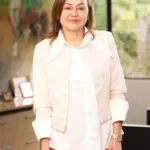
Then, the official spokespersons of the Presidency will be responsible for having direct and constant contact with the media at government offices in Bogotá, Barranquilla, Cali, and Medellín, a model similar to that which exists at the White House or that implemented by Javier Milei. This task will be handled by Carolina Gómez Sánchez, journalist and presenter, and Miller Soto, teacher, lawyer, and former councilman, who will debut the role of government spokespeople with the task of concentrating the dissemination of messages from the President, his ministers, and responding to the press about the various activities and circumstances of the government going forward.
Carlos Suárez, the political strategist who led the successful electoral campaign of De La Espriella, is the one who has designed this new centralized and organized methodology of communication that the new government will have.
In conversation with EL TIEMPO he stated: “What we are doing in terms of communication is something disruptive: the President communicates every 8 days directly with the citizens, we are delivering the presidential agenda that is 24/7 of work, minute by minute, through the President’s accounts and when we are in Government there will be breadth with all the channels that the Presidency and all ministries have.”
In this sense, that will be another change in the way of communicating: a strict centralization of messages from the ministries and their contact with the media from the Presidency will be consolidated: “A communication protocol,” explained Suárez, which has been designed to organize the communications of the high government and thus maintain a communication synchrony that avoids private agendas or informational mismatches between entities.

YouTube, the new channel
Unlike the digital communications of the previous government, in the mandate of Abelardo De La Espriella there will be a system of digital video messages mainly, which will inherit the emotional, direct, and precise sense that was had in the campaign.
The YouTube channel, the TikTok profile, as well as Instagram and Facebook of Abelardo De La Espriella will be the center of the communication effort and, more broadly, all the social media channels of the Presidency and ministries, when informing and connecting with citizen audiences and issuing institutional messages. It will be a new era of State communication different, although more organized and centralized, it will also be closed, meticulously controlled and with restricted access exclusively to what the high government wants to communicate to strategically and politically control the agenda of topics before public opinion and minimize unauthorized messages.
The networks of President De la Espriella
This is the digital communication structure of the new head of state:
- Twitter (X) @ABDELAESPRIELLA and @abdelaespriella, which together have 749,000 followers. It is a more institutional channel and official communication of the President.
- Instagram @delaespriella_style, with 2.5 million followers. It is a profile that mixes his presidential role with more personal messages, mainly based on video reels.
- Facebook has two profiles: @abdelaespriella, with 1.8 million fans, and @DELAESPRIELLAstyle, with 811,000 followers, dedicated to institutional messages and also personal and ‘behind the scenes’ of his daily life.
- YouTube, with 467,000 followers, is the multimedia center of digital communication, weekly live streams, and short videos of precise, emotional messages, organized by playlists.
- Tiktok @delaespriella_style, with 1.8 million followers, a high-impact and growing network, oriented to emotionality and showing ‘behind the scenes’, direct messages on various topics.
José Carlos García. R. – Multimedia Editor @JoseCarlosTecno
Read more Government’s economic agenda receives vote of confidence; but now the real challenge begins