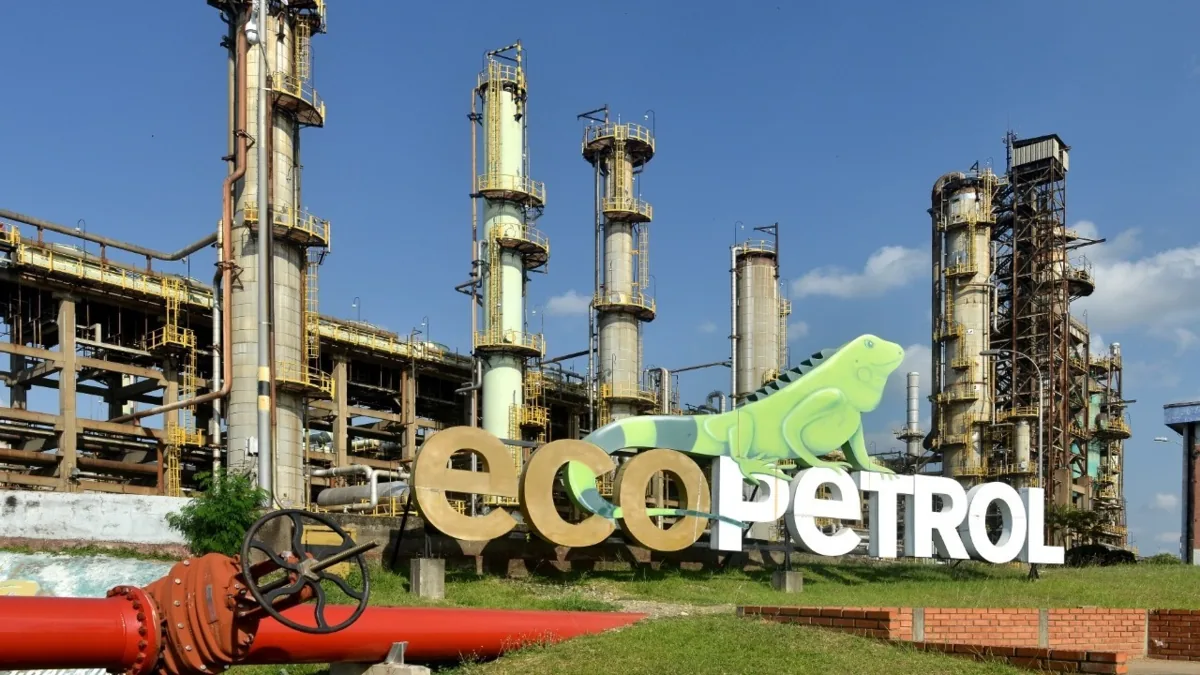






The Government of Abelardo de la Espriella presented the slate of candidates to be part of the new Board of Directors of Ecopetrol.
The election is scheduled for the extraordinary assembly on September 15.
The Government holds the majority of the company’s shares, so the assembly must ratify the list it is proposing to occupy six of the nine seats on the highest decision-making body of the oil company.
The Board is key because it will be responsible for choosing the next president of the company.
The idea is that the board for Ecopetrol must produce, transition, and regain trust.
When presenting the single slate to the Assembly on September 15, the government of President Abelardo De La Espriella points out that it is not about a total ideological change or improvisation but a composition that combines operational and institutional continuity with profiles capable of simultaneously managing the energy transition, financial discipline, auditing irregularities, and the reputational reconstruction of the country’s main company.
Although last July the then president-elect had announced Jorge Mario Velásquez, former president of Grupo Argos, to be nominated for the Board of Directors of Ecopetrol, the businessman was ultimately not included in the slate.
Sources close to the presidency indicated that the decision about Velásquez was an autonomous determination by the president after analyzing the current state of the company.
Who will be the members of the Board?
With three of the names, the Government expects a contribution especially in institutional memory, business knowledge, and risk control.
Luis Felipe Henao Cardona

The chairman of the Board brings experience in corporate governance, sustainability, public policy, and senior management. He is a lawyer, former Minister of Housing, has participated on the boards of EPM and Banco AV Villas, and already chaired the Corporate Governance Committee.
His tenure provides continuity to the body at a time of political transition and the definition of the new CEO.
Ricardo Rodríguez Yee
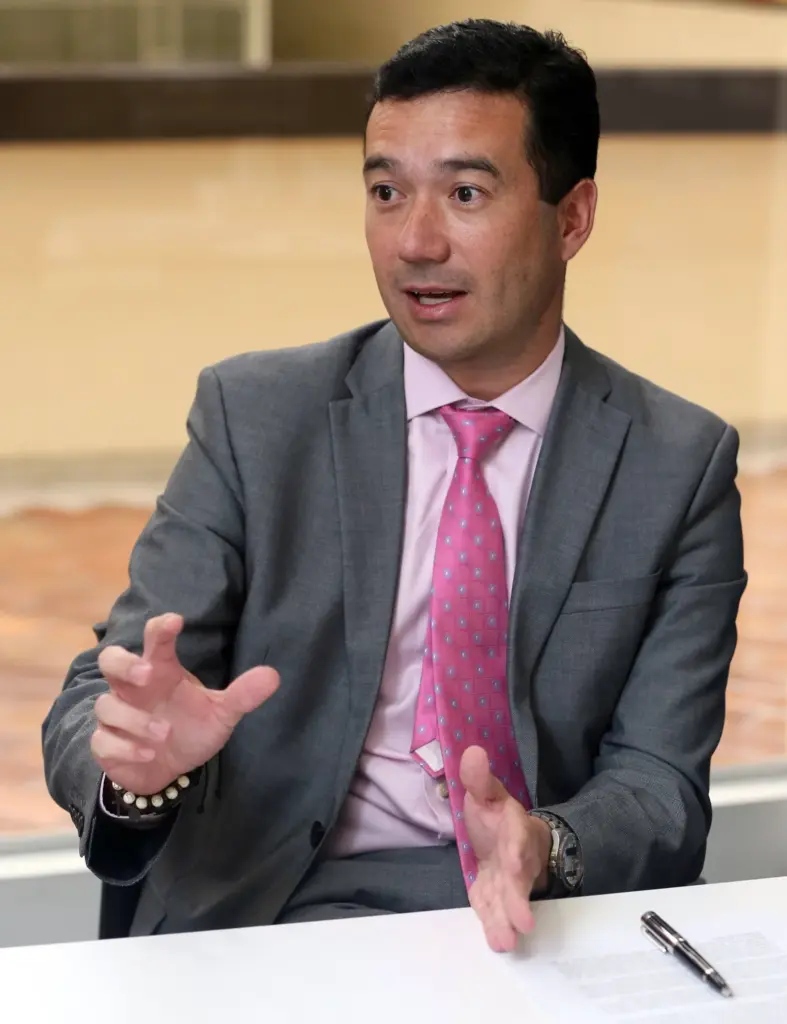
Ratified by the governors of producing departments, he chairs the Audit and Risk Committee and the Business Committee.
He is an industrial engineer, former deputy comptroller of Mines and Energy, former director of UPME, and an expert in restructuring state-owned companies, concentrating financial knowledge, energy planning, and tax investigation (Reficar and other cases).
His continuity is especially relevant to avoid interrupting forensic audits and to meet the standards of a company listed in New York.
César Loza

He is a workers’ representative (economist, supervisor at Ecopetrol, and former president of the Unión Sindical Obrera (USO)), bringing an internal operational vision, labor, and mining-energy regulation perspective.
He maintains the channel with the labor base and field knowledge at a time of organizational adjustments.
According to experts, this triad prevents a rupture that could paralyze key committees or lose experience in a high fiscal and stock market impact asset.
The new perspectives
With the new members, the Government hopes to address gaps the company now needs to fill: narrative and crisis management, integration with the electrical system (key for renewables and for ISA), management of large organizations, and legal and institutional capacity.
Carlos Augusto Suárez

The political communication strategist of President De La Espriella brings narrative design, public opinion reading, and reputational management. In a company that must simultaneously explain more exploration and more transition, and that is coming out of a period of questioning, this is considered, by including him in the slate, a competence that is not ornamental but of governance.
Suárez is a lawyer, specialist in Fiscal Control, and crisis management expert, has advised governors for decades, and is one of the men who best understands President De La Espriella.
José Camilo Manzur Jattin

Civil engineer with a master’s degree in Economics and president of Asocodis (electricity distributors), he has first-hand knowledge of regulation, tariffs, subsidies, integration of renewables into distribution networks, and liquidity in the electric sector.
This profile connects Ecopetrol’s hydrocarbon business with clean transmission and generation, and with the real bottlenecks of the transition in Colombia.
Jorge Alberto Jaller Jaramillo

The long-time executive at Grupo Éxito (vice president of retail, operations, and thousands of employees) brings management of complex organizations, results orientation, and stakeholder management in a company. He complements the technical view with business experience at scale.
Ludmila del Carmen Vergara

Lawyer with more than 25 years in the public, financial, infrastructure, and construction sectors, and recent Superintendent of Transport, she strengthens the legal capacity, prevention of legal risks, and institutional management. Useful in an environment of audits, contracts, and relations with the State.
Betzy Patricia Martínez and Claudia Margarita Lafaurie Taboada

They bring diversity of origin, social-territorial perspective, and complementary profiles in a body that must manage social license, communities in producing areas, and reputation beyond the markets. Martínez is a political leader from Atlántico and Lafaurie Taboada has developed part of her professional career in the hydrocarbon sector. She was deputy administrative and financial director of the National Hydrocarbons Agency (ANH).
For the Government, the group is not a uniform block, but combines financial and control experience (Rodríguez Yee), deep knowledge of the energy sector in its two bases (hydrocarbons and electricity), crisis and reputation capacity (Suárez, Vergara, Henao), labor and regional continuity (Loza and Rodríguez Yee), and strategic vision aligned with the new political cycle.
The balance that justifies the decision
The statutory reform, specifically article number 20 that would allow replacing almost all current members of the company’s board and would only keep the representatives of the departments, pension funds, and the workers’ representative, who would remain for 4 years, allows renewing the majority of seats, maintaining those of producing departments, pension/minority funds, and workers. The Government is precisely seeking that middle ground: not freezing a board from the previous term nor improvising one without anchorage.
It also seeks to respond to Ecopetrol’s need to produce and explore to finance the transition and the Government; provide rigor in risks and auditing to regain credibility, and have a coherent narrative for markets, workers, producing regions, and citizens.
This slate balances accumulated experience with new perspectives in strategy, crisis, and reputation.
Experts point out that in this way the Government has a body with the competencies the company requires in 2026: not choosing between oil and new energies, but governing both with financial discipline, risk control, and the ability to explain the direction by interpreting the promises of the new government and rebuilding the company.
Read more Urgent: Government overturns resolution that prohibited aerial spraying with glyphosate against coca
Read more Mobility in Bogotá today August 28: tow truck present at the North highway interchange point