





The Government put on the table this Friday the roadmap with which it intends to get the country out of the fiscal crisis: a cut of 21.9 trillion pesos in 2026 spending, another 17 trillion in austerity incorporated into the 2027 Budget, and an Economic Rescue Law that will be taken to Congress at the end of September to deepen the adjustment, with measures that, according to the Minister of Finance, Miguel Gómez, would allow unloading nearly 45 trillion additional public spending.
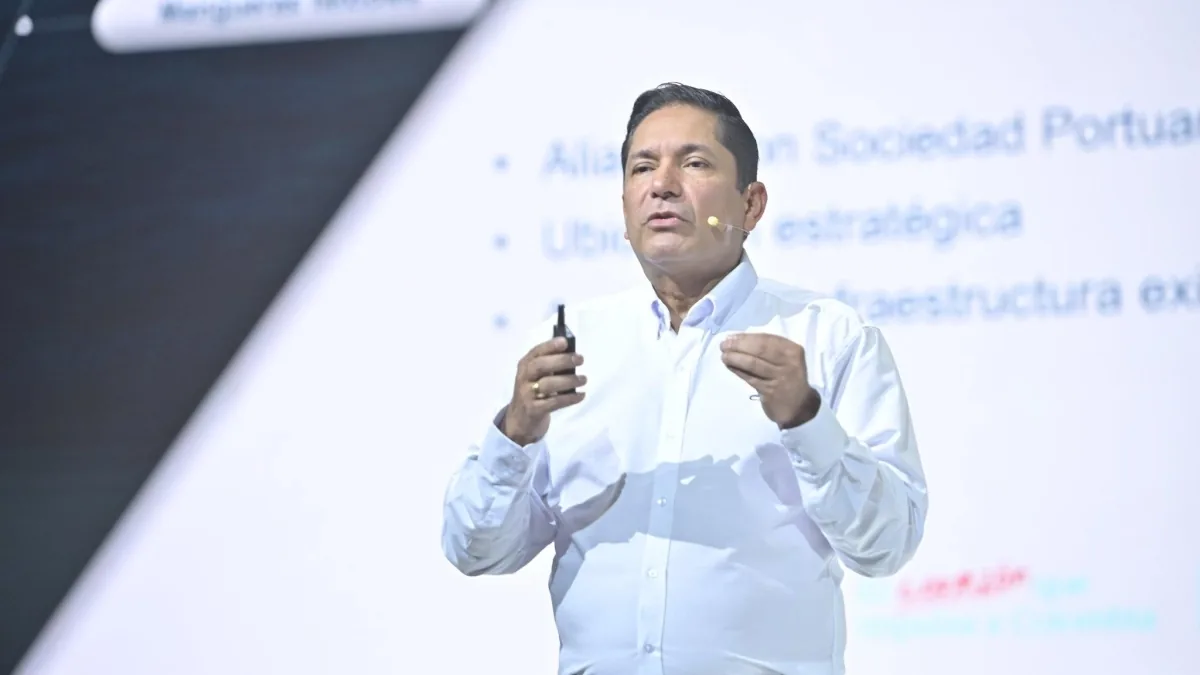
The strategy will have a third front in the new National Development Plan, which will include a package of incentives for private investment and a State reform to eliminate or reduce entities, merge functions, and cut structures that the Government considers duplicated or obsolete. “Here things are serious,” Gómez assured at the close of the 60th Banking Convention, in Cartagena, where he warned that the next six months will be decisive: “There we will play all or nothing.”
The first decision will arrive this Saturday. The Ministry of Finance will take to the Council of Ministers, which will meet in Barranquilla, a proposal to cut 21.9 trillion pesos from 2026 spending, an amount Gómez estimated at about 1.1 percent of GDP.
“We are going to make the fiscal adjustment because it is what is required and, additionally, because we have no choice,” he said.
The minister justified the decision with a severe diagnosis. He assured that Colombia is going through “probably the worst fiscal situation” in its history and warned that, if no corrective measures are taken, the primary deficit would end this year at 4.4 percent of GDP and the total fiscal deficit would reach 8.2 percent.
With the measures the Government will begin to implement, Finance expects to bring those indicators to 3.3 and 7.2 percent of GDP, respectively. However, Gómez acknowledged that not even that effort will solve the problem.
“Does that solve the problem? No. It does not solve it. The problem is so serious that it does not solve it,” he stressed.

Deceptive Budget
The second component of the adjustment is already incorporated in the General Budget of the Nation project for 2027.
Gómez assured that it contemplates an additional austerity effort of 17 trillion pesos, which will mainly come from cuts in acquisitions, transfers, and investment expenses considered non-priority.
The minister also defended the larger size of the budget project presented by the Government and assured that it responds to obligations that, according to Finance, had been underfunded or underestimated in the accounts received from the previous administration.
According to the official, Finance found about 22 trillion pesos in underfunded items and approximately 37 trillion in underestimation in debt service.
“That is the truth, whether it hurts whoever it hurts,” he said defending what he has called the “budget of truth.”
As he explained, the previous Government had calculated debt service at around 118 trillion pesos, while the Ministry’s estimates place it at about 155 trillion, a difference of about 37 trillion.
“We could have played dumb, yes, but then, how are they going to trust us?” Gómez said, announcing that in a few days he will travel to New York and Washington to explain the new Government’s economic strategy.
Rescue Law
After the 2026 adjustment and the austerity component included in the 2027 Budget, there will be a third immediate fiscal tool called the Economic Rescue Law, or financial law.
The project will be presented to Congress and will focus on reducing public spending, not a new tax burden.
“This country cannot bear more taxes,” said the minister.
According to Gómez, if Congress supports the package, the Government could unload about 45 trillion pesos additional from public spending.

The goal of that effort will be to gradually bring public accounts closer to balance. The target the Government has set is to end its term with a primary surplus of 0.4 percent of GDP.
Even if it achieves that result, Gómez warned, the country would barely manage to stabilize public debt around 64 percent of GDP, without yet managing to reduce it.
“That is the magnitude of the problem,” he said. “All this sacrifice of austerity, effort, slimming down the State, all that would allow us to stabilize the level of indebtedness.”
If the adjustment is not made, he added, the debt trajectory could take it to 82 percent of GDP by the end of the Government and generate sustainability and payment capacity problems.
Decisive Months
The third front of the strategy will be the National Development Plan, which will include incentives for private investment and a reform of the state structure. “We have to reduce the State. We have no way to finance the State we have today,” Gómez said. The Government will seek to eliminate entities with duplicated functions, generate synergies among agencies, and reform those it considers outdated or obsolete.
The adjustment, however, must be accompanied by a recovery in investment and growth. Gómez said that investment is at levels Colombia had not seen since 1975 and announced that the Development Plan will contain an “important package of incentives” for the productive sector. “We put public finances in order; you help us with growth, because growth cannot come from Government stimulus,” he told the bankers.
The minister also ruled out any possibility of renegotiating the country’s obligations. “We will not be tempted by those who talk about renegotiation schemes,” he said, adding: “We have always paid our debts and we have to keep paying our debts.”

Gómez warned that the next six months will be decisive to execute the fiscal adjustment and get a response from private investment. “We will do whatever we have to do in terms of austerity,” he said, before closing with a warning: “We are in a very complicated situation. If we do nothing, we will have no future as an economy.”
Gómez also invited bankers to work hand in hand with the Government to recover growth and move the country forward. “We put public finances in order; you help us with growth,” he told them. And he added: “The Government cannot do it alone, the Government needs you,” pointing out that the effort will also require Congress, businesspeople, and guilds.
Read more Los retos jurídicos del Gobierno Nacional para reactivar la aspersión aérea
Read more Did the public payroll increase in the General Budget of the Nation for 2027?