




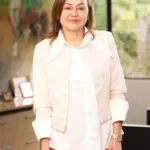


Craig Dyckers is the creator of the new Library of Alexandria in Egypt; he made Norwegians walk on the roof of the opera house building and, among other wonders, built the first underwater restaurant in Europe, where marine life can also be studied. Craig Dykers was born in Germany but has not spent much time in Frankfurt, his hometown; his dad was a corporal in the United States Army and his mom a London seamstress. He lives in Brooklyn with his partner and wife, Elaine Molinar, and they collect tiny objects. He saw from a plane — before making an emergency landing at an airport in Canada — the tragedy of the Twin Towers and later built the 9/11 Memorial Pavilion in the so-called Ground Zero. He is one of the great architects on the planet and had this conversation with BOCAS Magazine.
Craig Dykers likes to be part of the whole; every time he lands in a city he tries to walk from the airport to his hotel. “For many it sounds crazy, but I feel you can see the city in a very different way when you walk it from the edges inward. That tells you much more than when you simply stick to its most perfect and utopian parts. Seeing layer after layer of the architectural wonders that make it up is amazing,” he says with a thin smile that makes his green eyes narrow as he recalls that, in the United States, he has walked from Charlotte airport to downtown crossing forgotten parts with unfinished old buildings, empty parking lots, and streets that gradually organize themselves.
Perhaps that is why he dresses simply. He likes hats and berets, wears glasses with transparent frames and wide lenses that reveal eyebrows typical of someone who was once blond, and his beard, between gray and copper, is kept trimmed outlining the shape of a firm jaw. He speaks unhurriedly, as if the words were part of the air around him, and usually wears neutral pants and Mao shirts, the kind first seen in imperial China in the sixties — in the times of Mao Zedong — and made popular in the West by the Beatles.

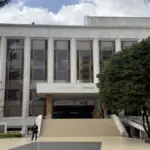
However, the simplicity of his appearance contrasts with the grandeur of the works he has co-created: the new Library of Alexandria in Egypt, inaugurated in 2002 and costing approximately 230 million dollars, was designed as a large solar disk rising from the waterfront with views of the Mediterranean, covering an area of 36,700 square meters and an exterior wall inscribed with 120 different scripts and alphabets, and definitely honors the mythical library of the ancient world that guarded more than 700,000 papyri and aimed to gather all the books in the world.

His firm is also behind the Oslo Opera House, known for its design as an iceberg emerging from the fjord, allowing people to walk on its roof that gently slopes toward the water creating a public space with an unparalleled view; or the 9/11 Memorial Museum Pavilion in New York where visitors can reflect in the water flowing through the pools that once housed the Twin Towers and, as a tourist said, “see with the heart.”
The list goes on. Dykers is behind the Powerhouse Brattørkaia, the world’s first positive energy building in the Arctic; Under, the first underwater restaurant in Europe; and the Environmental Sciences Museum project at the University of Guadalajara, which will have the most biodiverse rooftop garden in all of Latin America.
Craig Dykers was born in Frankfurt, West Germany, in 1961, the year construction began on the Berlin Wall and his city became a symbol of Western freedom by receiving waves of refugees. However, he has spent most of his 64 years outside Germany. His father, Edward Dykers, was born in the Chihuahua desert when there were no clear borders preventing movement between Mexico and the United States. He was poor. He lived in foster homes until he became a corporal in the Army when he was just 14 years old and served in hospital units during World War II, then in Korea and Vietnam where he reached the rank of sergeant major. In post-war London, he met Sibyl, who would be the mother of his two children, Scott and Craig. She was a seamstress from the East London slums, and after spending several summers in Europe, they moved to the United States.

In America, Craig grew up among pencils and papers, never had drawing classes, but taught himself and fell in love with calligraphy. “I was fascinated by letters and drew different types from all over the world. I even copied Mayan alphabets just because I found all those hieroglyphs very intriguing. But mainly, I focused on modern European alphabets that surprised me,” he says with the excitement of someone recalling memories of a warm childhood.
A childhood that, however, was also marked by his father’s temporary absences when he was called to serve. “When I was little, we read the newspaper daily to know if he was alive or dead. He cared for everyone, even in war he attended to both sides and civilians,” he recalls, bonding with his older brother Scott, who is five years older and now described as a brilliant engineer with a prodigious mind. “He’s always looking out for me and always finds joy and connection with the people he meets. He loves partying as much as academia. I like to think of him as my role model,” he confirms with a slight sigh.
His parents encouraged him to follow the path of the arts, but he decided to study medicine at the University of Texas, Austin, because his greatest curiosity was the human body, scientifically and psychologically, but art was calling him, so he moved to architecture which, for him, is nothing more than an extension of the study of the human body. “Architecture is about the human body. Without humanity, we would have a different kind of architectural structure. How we are built, how we walk, how we move our heads and bodies, all that not only shapes other forms but can allow creating a better or worse state of health in people depending on the design they inhabit. That’s why I am convinced that people thrive when living in good design,” he assures.
In the classrooms of Austin, he also met his wife: architect Elaine Molinar, with whom, at 28 years old, and along with a group of Norwegian and American designer friends, all under 30, they moved to a small senior apartment in Los Angeles, where they dedicated themselves to creating one of the 1,400 proposals that competed in 1989 to design the new Library of Alexandria. The unknown collective they named Snøhetta, after the very beautiful mountain located in central Norway that houses the Valhalla palace in Norse mythology, won the competition. “After that, we all went back to our normal lives,” he says laughing. Normal by their terms. He was used to moving as a child with each military transfer of his dad. “As soon as I made friends, I had to say goodbye to them and make new ones wherever I arrived. That was my life for 20 years,” he recounts. And it would continue like that. Since the project in Egypt, officially inaugurated in 2002 and attracting nearly a million visitors a year, Dykers has not stopped traveling the world.
His sustainable and innovative designs made Snøhetta — which he co-founded with Kjetil Thorsen, and now includes Elaine Molinar, Alan Gordon, and Michelle Delk — named one of the 50 most innovative companies in the world according to The Wall Street Journal, and awarded honors such as the Cooper Hewitt National Design Award, the Aga Khan Award for Architecture, the Wan Sustainable Building Award, the Mies van der Rohe Award, the Mario Pani Award, among others. He even had a project in Bogotá. Snøhetta was among the five finalists — along with the project of renowned Iraqi architect Zaha Hadid — to design the Ágora International Convention Center in Bogotá, which was ultimately built by Estudio Herreros and Bermúdez Arquitectos.
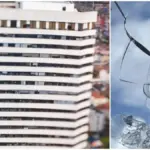
Dykers is a language enthusiast, speaks German, English, Norwegian, a bit of Arabic, Italian, Spanish, and Chinese. His greatest delight is meeting people and he does not believe he was put on this earth to have a routine. He walks alone through mountains and trails and assures that his greatest inspiration is life itself in all its dimensions. This is the story of a collector of fetishes, tiny cult amulets, who came to Bogotá to be part of World Cities Day and looks amazed as he watches urban life unfold among the mountains from the iconic Tequendama hotel.
You probably started differently than most, your first big project was monumental: the Library of Alexandria in Egypt. How is it that you received the news of the competition while in the shower and came out naked shouting “We won!”?
Yes, yes, yes, I forgot I was naked (laughs). It was quite shocking, I went out to the garden and started shouting and then realized I had forgotten to put on a robe. I was so excited. I was 28 years old and it was almost impossible to achieve what we did being so young. When we finished the design with my Norwegian colleagues, we really felt we would get a mention because it was very different from other architectural works being created in the late 1980s, but we never thought we would get first place. So hearing that we won was a complete shock. I only had five years of experience and I think that was a point in our favor. We knew our weaknesses and talked to people who had strengths in different areas, so we ended up creating a larger group so that, cooperatively, we could succeed.
Do you remember what it was like working in Egypt, the days, the atmosphere?
They were very long days. When we moved there, we set up a studio and I would say about 80 percent of the staff were Egyptians because we wanted the project to have a local connection. But there was also a lot of international staff, people from everywhere, and we felt it was important to build connections with people. Egypt is a very diverse country, there are Christians, Muslims, and all kinds of people living there, and it has been that way for thousands of years. But it operates on a very different schedule than most of the world. Everyone looks at the pyramids and thinks they work nonstop, but actually everything moves a bit slower sometimes, and very, very fast at other times. So balancing the biological clock was important for us to know when it was okay to let things move slowly and how to push when we needed to go faster. We learned a bit of Arabic and connected with many kinds of people.
You have said that during the Arab Spring of 2011 they were going to set fire to the library because of the protests, but regardless of political identity, people physically defended the building to prevent it from being destroyed.
I still think about it and it gives me chills. But I think we were very lucky. I couldn’t believe that after so much effort everything was going to end destroyed, but seeing people creating a human barrier to protect it made me deepen even more in our reason for being. Most of our work is based on the value of people and how they can be given a space to feel good about themselves because when you feel good in a place, you make it part of you. Something that, if you think about it, is strange because most architecture is about stepping back and feeling impressed by this amazing thing that looks good on a postcard or magazine cover, but our projects are enjoyed by ordinary people who go there to meet someone, share a moment with themselves, or create good memories. That’s why having a sculptural icon end up being enjoyed by people is the best I can imagine. I always joke that I can measure the success of our buildings, or any building really, by how many people are holding hands inside it.

Then came the Oslo Opera House, another world symbol that took 9 years to build. What do you remember about the first day you saw people walking on the roof as if it were a plaza?
It was an incredible experience to see an opera house turned into a public plaza and occupied by thousands of people on its roof. Most operas are spaces you can appreciate and love, but you see them from what happens inside, which will always be a wonderful experience. And seeing that here you can walk on the roof, take your dog, have a picnic afternoon with friends, or just go there even if you don’t like opera, is exciting. And what happened, of course, was that people who thought they didn’t like opera ended up buying tickets and loving it. That’s fun! Of course, it was difficult to design a building that inside worked both for opera and ballet because their needs are not the same. Opera wants a narrow stage with strong acoustics, and ballet wants a wide stage with quiet acoustics, but we achieved it.
You were born in Frankfurt, with a father from the Chihuahua desert and a London mother. What do you have from that unique mix of origins?
I feel very fortunate to have that mix. I feel very comfortable in deserts and remote regions of the Americas, just as in a big city like Bogotá or London. And although the cultures are very different, I think they connect because both are very social and that is something that fascinates me. But it’s important to say that both my father and mother were very poor, they couldn’t get an education until they were 14 or 15 years old and lived in foster homes because their parents couldn’t support them. My mother, for example, had to do that during World War II, when she met my father, until the bombings in London were so intense she had to leave the city. That’s why I think I’m very lucky they were interested in things like art and architecture; I remember that from a young age they encouraged me to work in those worlds instead of moving away from them, as some parents would.
What did you like as a child, did you draw?
I never had drawing or music classes. I taught myself to draw and play music without any formal education. And I was quite good. I saw people were surprised, but at that time I had no idea why I was interested, I felt it was a natural talent. As time went by I became more aware of art and fine arts. I remember my father was the first to recommend I explore architecture.
You studied architecture in Austin, but university also led you to meet your wife, architect Elaine Molinar. How was that first meeting?
She is from El Paso, Texas, and was part of the first generations born with a clear border. In her family’s times, and my father’s, there were no borders. People lived on both sides naturally. And I could feel her desert ancestors when I met her. I was in another class, but I entered the room where she was and saw a project of hers that I immediately fell in love with. It was quite unique and had a special character. That’s where we first talked. I borrowed five cents from her to invite her for coffee because I didn’t have a penny in my pocket. And well, the rest is history. She was a ballet dancer before becoming an architect and, since ballet is also about the body, I think we were united by fascination with the physical character of things.
And you have worked together since then. What is it like to share both your personal life and creative projects with the same person?
Well, it’s an interesting situation because it’s not just about working together, but in a very difficult and challenging profession. Architecture is among the hardest professions to work in because the pressure is very high and deadlines very tight. So, we try to find ways to balance things our way. We have never succeeded in keeping our work out of our home. Some people can do that, but we don’t separate them. What helps us, I think, is that we have many interests in common besides architecture. We both love to dance, love art, and reserve time to do art that is not architectural. She makes sculptural works and I draw.
Do you dance everything?
Well, I dance differently than Elaine. I wish I could have danced ballet as a child, but I love to dance free of space and rules. I’m more impulsive. And in her, it’s all about the order of dance.
What is behind that habit of yours and Elaine’s of collecting tchotchkes, which I understand are small objects?
Yes, they all tend to be very small. I like to say that if something is bigger than a thumb, we shouldn’t keep it (laughs). I find that very small things can contain a lot of the place where you got them because the object represents the culture it comes from. And somehow, the smaller it is, the more it contains inside its tiny body. A bigger object can also be beautiful, but somehow it tells you too much or gives you more information than sometimes needed. And added to that, each culture has what I call fetishes or tchotchkes, which is a Yiddish word meaning: an object that has spiritual value. Ancient cultures, indigenous cultures, all, anywhere, have created a fetish of some kind and put the power and energy of an idea bigger than themselves into those objects.
You and your wife live in many places for work, but live in Brooklyn. What is your home like? What do you see from your window?
When I first moved to my neighborhood, which is right next to the Brooklyn Bridge and has a very strange name: Dumbo, like the Disney elephant, no one lived there. The streets were still dirt and not a car appeared there. It was just an empty place, with very few people. But now it’s the most popular neighborhood, not because I moved there, obviously, but because so many interesting places were created that now tourists from everywhere visit it. It’s as busy as Times Square. I live near the water in an old warehouse from 1905, which is old for New York City, and is now a 10-story building. And, since I live at street level, on the ground floor, when I look out the window I always see thousands of people who come every day to take pictures of the park. I love watching them pass, the noise they make, because it’s active and enthusiastic, not uncomfortable. And then, looking in another direction, I can see the East River, and if I just step out my door, I see Manhattan on the other side. That makes my home a pretty special experience.
New York is a city with many skyscrapers, do you have a favorite?
Of course, there are many interesting ones, but the old Woolworth building in Lower Manhattan remains my favorite. It was built in the early 1900s, so it was one of the first skyscrapers in the United States that maintains beautiful quality and great detail. Now, from the Art Deco period, the Chrysler building is an icon. And among newer buildings, I love the Lever House and the Citigroup Center; I also want to mention one we built on Central Park West that will officially open soon.

Do you have any ritual or routine before starting work?
If I ever have a routine, I would consider myself lucky (laughs). I guess I wasn’t meant to have one. I don’t think I was put on this earth to have a routine. Elaine, on the other hand, does. She always makes herself a cup of tea no matter where she is. But I love the fact that every day is different, I move in different directions and avoid routines. Within all that, there are certain things I always look to do. For example, I enjoy walking, I haven’t had a car in 40 years, so I prefer to walk everywhere, or take public transport if the distance doesn’t allow it. I only use a taxi if I’m really in a hurry or if I have to dress for a gala or event that requires special clothes. But even then, dressed in a tuxedo, I prefer to take the subway, which is very funny. And I have a very old bike, it’s from 1942, and I’ve had it for 35 years in perfect condition. And at night, I try to socialize whenever I can. I try not to work too late, it’s something I always recommend to my team. It’s not good or healthy. So I like to go out and talk with friends or have a cocktail. In Dumbo, in fact, I have some friends from Colombia who have a small jewelry store, so I usually visit them and spend some time with them.
How was connecting with Norway, the country you even chose to marry in?
Most people in the world know it’s a beautiful country with a deep history, but since none of us were really ethnically Norwegian, we eventually became residents. What caught my attention most was seeing a place with so few people in such a large environment. It’s a very large country with half the population of Bogotá. There is also an ancient culture there, they are called the Sami people and are the only indigenous Europeans still existing. I loved connecting with them because they are very colorful, love singing and dancing, so I discovered things I hadn’t imagined.
Let’s go to 2001: on September 11 you were on a plane heading to New York and saw from the air the second attack on the Twin Towers. How did you experience those minutes?
That was a profound moment in many people’s lives and certainly in mine. I was flying from London to New York City, where I was going to connect to get to Texas. But as we flew over Long Island, the plane made a very sharp turn. At that moment we thought it was a maneuver to wait for landing authorization, but then we saw the plane turn around again and that’s when the pilot spoke and told us we couldn’t land in New York because, apparently, there had been an accident or explosion at the World Trade Center in Manhattan. And as we turned, we saw the smoke from the first crashed plane and that’s when we could see the crash of the second plane; although at that time we didn’t know what it was because of the distance, it was a kind of puff!, a flash we thought was caused by a terrible accident. Then we were told we would have to fly to Canada, so we went to a small town called Gander in Newfoundland, with only 10,000 residents, and 8,000 people landed there that day. So we doubled the population of this small town and only when we landed did we realize what had happened was a terrorist attack.
A state of shock…
It was a real shock. People were crying and hugging. I can’t even… sorry, it takes me a minute to be able to think about it again. It was very moving. I ended up flying back to Norway and, strangely, that was a month before the date we had planned to open the Library of Alexandria in Egypt, but since the airspace was closed everywhere, we couldn’t have the public opening after 13 years of work. It was an anticlimax. We were very excited before September 11, because we had just seen the fall of the Berlin Wall, the end of the Soviet Union, the Oslo peace attempts, the end of the civil war in Lebanon… we felt it was a great time to be alive, but then everything fell apart.
Years later, you were in charge of designing the 9/11 Memorial Pavilion in the so-called Ground Zero in New York…
When we won the contract to help rebuild the World Trade Center site, I returned to New York and the first place we went to was called the Family Room, which was created for relatives who had lost a loved one in the attacks. I remember it was a very large room decorated with photos of all the members with their loved ones with hearts and notes. It’s something I can’t explain, but I could feel the spirit of the deceased and all their relatives; it was terribly moving. We connected them to the project and I remember when the frontline people: police, firefighters, medical staff who survived found out who I was, they expressed how grateful they were to be able to work on a project that was not what they were dedicated to. They were proud to be challenged by architecture and design in an unexpected way. I think the most important thing is that the idea behind our construction there is very unique. Most of the site is dedicated to the absence of lost lives, but our building is the opposite, we wanted it to be about presence, to make you know you are alive. So we made a facade where you can take photos with your reflection. We said if we could make one person smile at the World Trade Center site, we would have done our job well. And we were very lucky that more than one person has smiled and felt hope, life, and presence inhabiting this space.
Among so many great and historic projects, you have also built some different ones like a dollhouse or a bird’s nest, which one do you hold special affection for?
The dollhouse was very fun, in fact, we made two. Interestingly, one of them ended up at an art auction and sold for a higher value than the works of a very famous period painter. It was a small dollhouse that, unlike the imagination where they are usually very simple and domestic with a pointed roof, rooms, and the typical housewife in the kitchen, we wanted to make something that helped a girl, which could also be for a boy, but mainly we were inspired by girls, to understand the world more broadly, so it opens in a very unusual way. It also has unusual furniture. But the most important thing is that it allows whoever uses it to understand that they don’t have to have a specific structure to be happy. Building a dollhouse is harder than you think because you can’t fake anything, everything has to be real. So there has to be a way for the wallpaper to end on the floor, the doors have to work, as well as everything inside. It even has a small hole for mice and inside you can see the mice’s house.
You have said that silence and nature are central to your creative process. Do you remember a specific landscape that inspired you to make a project?
To make the Calgary Central Library in Canada, we were inspired by the sky. We tend to overlook the sky and forget it is a fundamental part of the landscape. Can you imagine our world without the sky? So we were inspired by Calgary’s sky and a special type of cloud that forms there at a certain time of year and is named Chinook after the Indigenous First Nations peoples. Just as the cloud creates a vast arc over the sky, we designed this building, and the interesting thing is that on some days you can see a Chinook cloud over the library.
You speak many languages. What place does language have in your life?
I have always appreciated how languages represent a different spirit. Things, like some languages, are easier to start and harder to learn well, and others you simply can never really learn. Russian, for example, with its Cyrillic alphabet, is very difficult for me because it’s too close to the ones I know. And others, like Spanish, you can learn the basics very quickly, but once you start with verb conjugations, everything starts to get a bit complicated. As for Chinese, it is a language that has no gender or tense, hence my fascination.

How is it that as a child you dreamed in English, but with a Spanish accent…
Wow, where did you find all these things? (laughs). When I was very young, I spoke more languages more often because I lived in several places. And if you speak a language a little more than a day, your dreams will fall into two or more different languages, which is always funny.
What is your opinion on gentrification?
The word gentrification in today’s world tends to mean something negative. It means that people with fewer economic resources are being displaced from their places of residence. And that is something bad. But there are two other ways to see gentrification positively. One is when gentrification does not mean that richer classes move in. For example, a project we did in East New York made the building so valuable to the community itself that they started taking care of their surroundings, attracted more commerce to the area, and a greater sense of belonging. But it wasn’t because richer people were moving in, it was simply because people were prouder of their neighborhood. That is the best kind of gentrification. The other kind of gentrification that could be positive, although not always, is if the people remodeling different areas are simultaneously thinking about how to care for people who may need a new place to live because their current infrastructure is falling apart, but without evicting them from their neighborhoods.
Finally, I would like to ask you, after so many projects and so many countries, where do you feel most yourself?
That’s a good question. I usually answer this by saying in the last seat of a bus. Wherever I am, I feel comfortable in the back of public transport, it’s my fun way to evoke that I like to feel part of the whole. That’s why I like to walk the streets more than use a car. Actually, I feel at home wherever I am because moving every two years practically my whole life I adapted to see, meet, and listen to people wherever I go, it’s something I really enjoy. I also take many photos, I have always been interested in capturing daily life, but it’s very difficult to take that kind of photos because if you have a camera, everything immediately changes, so I never frame or focus anything. I just shoot. And you know, you end up capturing people in wonderful and natural moments.
You visited Bogotá as a special guest for World Cities Day. What is your perspective on the capital of Colombia?
I think there is an incredible kind of heroic architecture that was created especially in Bogotá and that you can still see throughout the city as you walk. It’s quite profound work. Similar to what you find when you go to places like Mexico or Peru. Then, I find a parallel with Istanbul, which has a fairly wide range of hills and mountains in the distance. Not as high as the mountains here, but quite significant hills. And both cities have to fit into those hills. Also, it can rain a lot and then be dry, and they have an ancient and modern history. And finally, the people are really wonderful both there and here.
Stephany Echavarría
BOCAS MAGAZINE
Recommended: Martin Scorsese’s Rage

Read more This is the formula proposed by the BVC and Asobolsa for the Colombian capital market to take off
Read more Join our talk for EL TIEMPO subscribers with Colombian writer Pilar Quintana: register here