



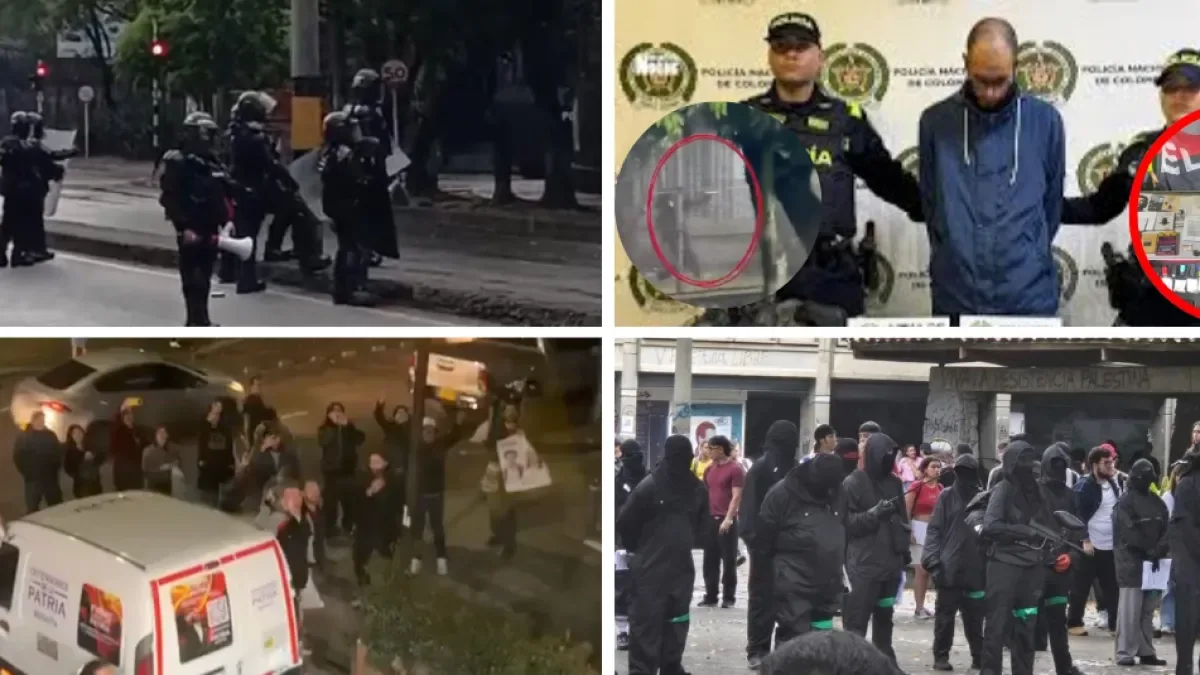
The mayor of Medellín, Federico Gutiérrez, did not hesitate to call nearly 40 hooded individuals who took over a sector of the University of Antioquia on June 3, 72 hours after the first presidential round, terrorists.
One of the individuals was carrying a firearm with which he shot at the armored vehicles of the police from the former Esmad, who had to intervene to prevent the violent episode from escalating.
And although initially attention focused on the modified weapons that several of the hooded individuals used to throw potato bombs and Molotov cocktails, it later shifted to the home of the man with the pistol.
Intelligence reports
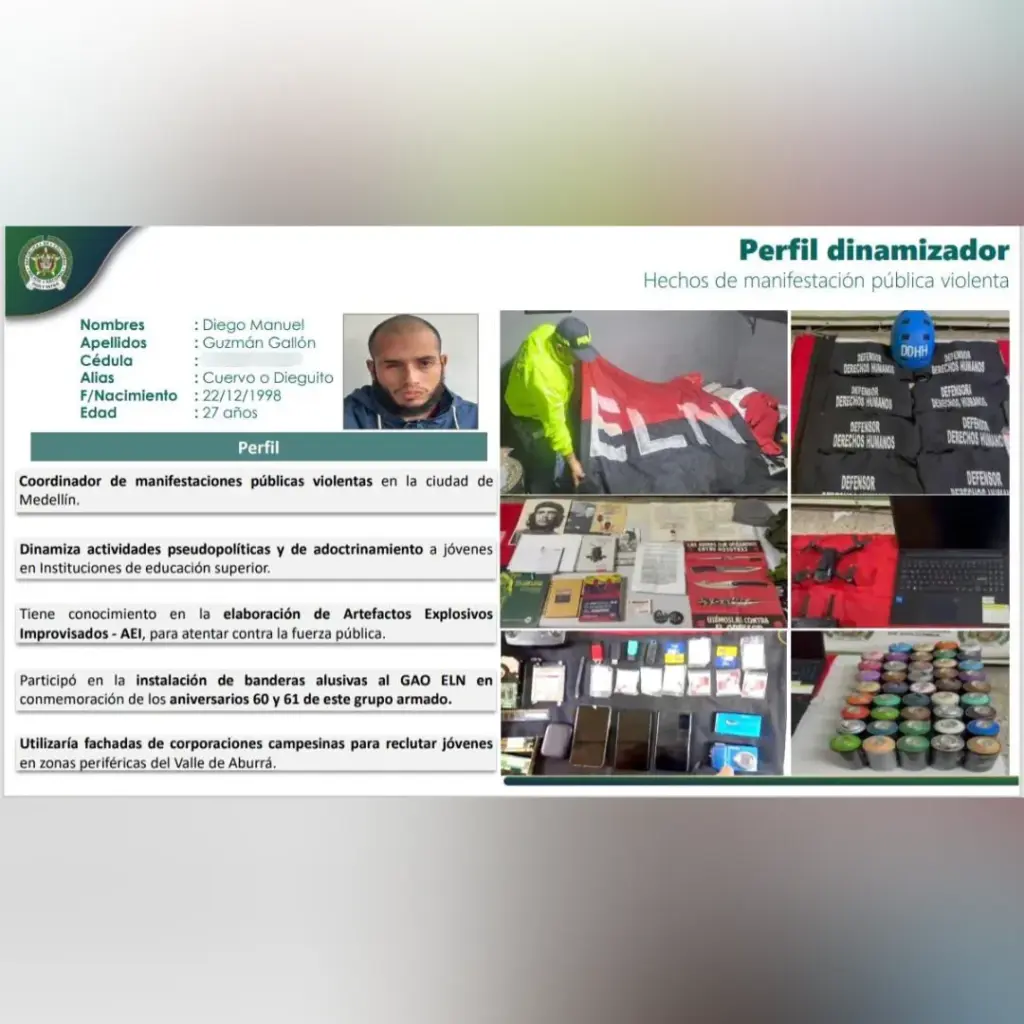
There, flags of the Eln guerrilla, fake journalist and human rights defender credentials, military clothing, a drone, and instructions for manufacturing explosives were found.
The man was identified as Diego Manuel Guzmán Gallón, alias Cuervo, 27 years old, arrested in the Castilla neighborhood. For intelligence agencies, this case is proof that several of the disturbances that have occurred in universities and even in candidates’ headquarters go beyond dangerous, uncontrolled demonstrations by sympathizers.
EL TIEMPO learned of a police document stating that ‘Cuervo’ is the coordinator of violent demonstrations, a promoter of political activities and indoctrination of young people, and has knowledge in the manufacture of explosive devices.
These intelligence findings align with statements from candidates like Abelardo de la Espriella, who said last Thursday that “they are preparing a second social outburst to disregard the elections, set the country on fire, and lead us to a situation as regrettable as that of 2021.”
The candidate refers to President Petro’s statements about not recognizing the pre-count results, but also to the attack suffered by his campaign headquarters in the Teusaquillo neighborhood of Bogotá, where a mob with Cepeda’s banners held his sympathizers, who reported verbal aggressions and intimidation.
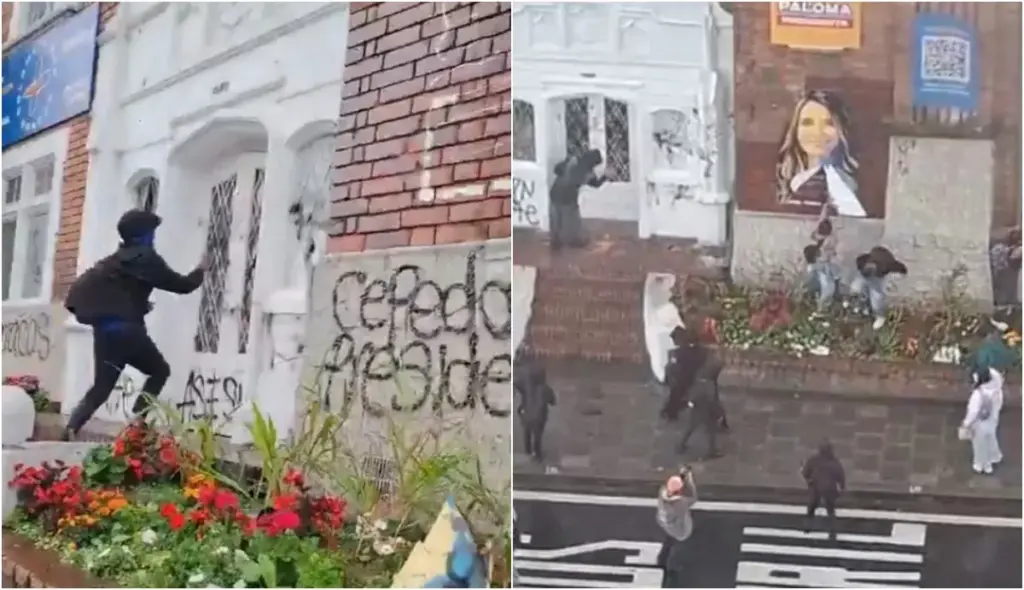
Paloma Valencia’s headquarters in Chapinero had already been vandalized two weeks earlier. Protesters destroyed doors, advertising, and left hate messages on walls.
And in Medellín, on April 26, the campaign headquarters of the Historical Pact candidate, Iván Cepeda, was vandalized for a second time. According to reports, several people threw stones and paint at the facade and at an LED screen displaying the candidate’s advertising.
The fear is that some expressions of polarization and hatred may be instrumentalized by extremist groups.
The other universities
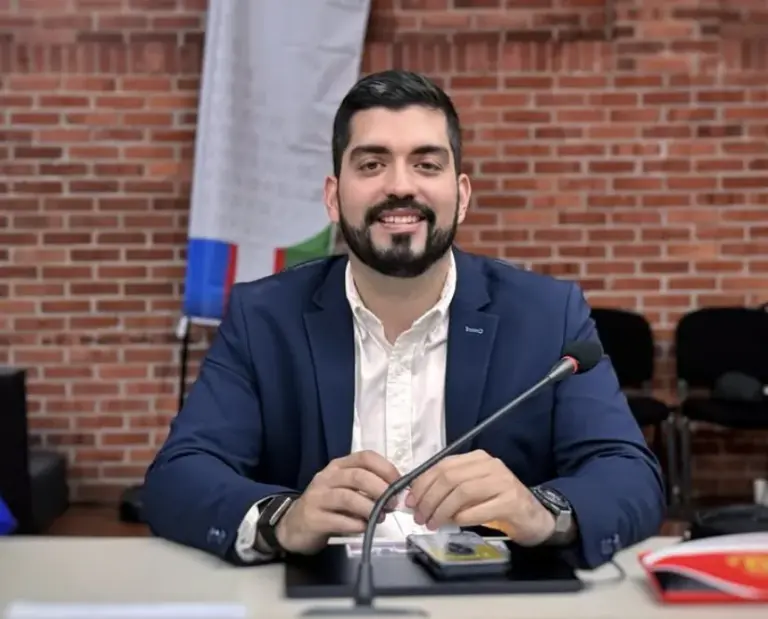
In Cali, councilman Juan Felipe Murgueitio, from the Democratic Center, denounced the existence of a WhatsApp chat —which is already being investigated— with about 500 people in which disturbances and vandalic acts would be promoted in the event that Abelardo de la Espriella wins the second round.
The complaint was made parallel to the registration of violent acts at the Universidad del Valle, where classes were suspended after the student assembly announced a strike until June 23 and support for Cepeda.
The rector of that institution assured that there is information that several people participating in the protests and in violent acts do not belong to the student community and arrive from other cities.
In videos circulating on social media, hooded and masked individuals are seen guarding the university’s entrances.
And it is being verified whether, as in Medellín, illegal armed groups are infiltrating student protests with members of their urban cells.
Its mayor, Alejandro Éder, stated: “We respect peaceful demonstration, we respect the rights of every citizen, but tolerance for violence, vandalism, and blockades will be zero.”
And in Bogotá, clashes between the police and hooded individuals have been registered at the headquarters of the National University and the Pedagogical University. Although in the latter, directors have linked the issue to clashes over fare evaders on TransMilenio, in the capital there is also information about plans to generate violence within the framework of the second presidential round.
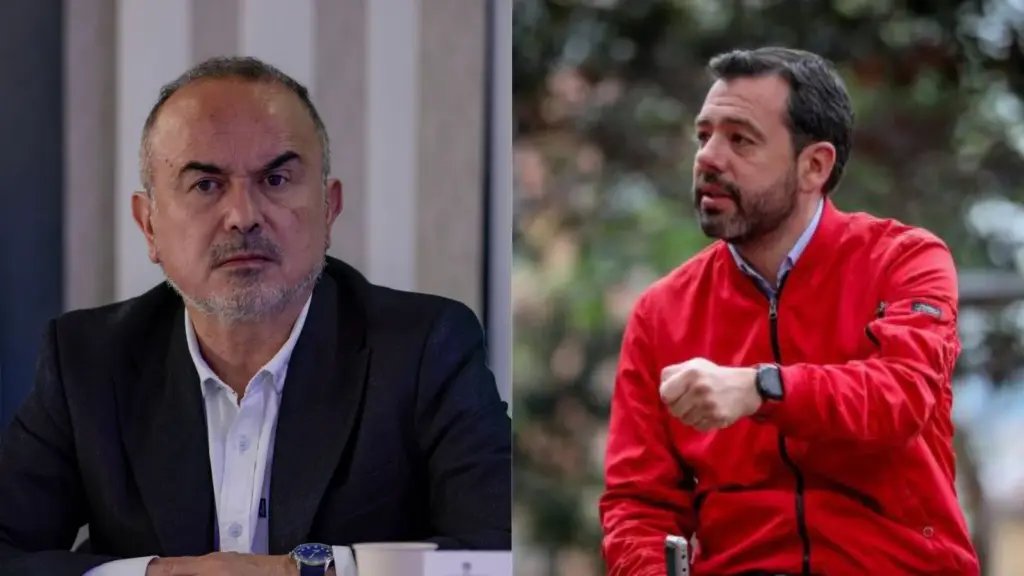
“Today’s acts of vandalism are not social protest, they are violence, and what is more serious, driven by statements from President Petro himself,” Mayor Carlos Galán said on May 21.
(Consult all articles from EL TIEMPO’s Investigative Unit here)
The Ministry of Defense announced up to 200 million pesos for information that helps prevent violent acts ahead of the second round. And intelligence officials have already identified several alleged leaders who seek to disrupt public order.
INVESTIGATIVE UNIT
u.investigativa@eltiempo.com
@UinvestigativaET
Follow us now on Facebook