









18 days before leaving the Casa de Nariño, the government of Gustavo Petro filed before the new Congress of the Republic a tax reform bill to balance public finances deteriorated by high levels of deficit and debt.
According to the outgoing Government, this reform would constitute the starting point for an orderly and sustainable adjustment path aimed at re-establishing the balance between income and expenses for the next four years, a period in which the newly elected president Abelardo De La Espriella will have to govern.

Therefore, the elected vice president, José Manuel Restrepo, stated days ago that it is an attribution that does not correspond to them and that should really remain in their hands. “This action is unnecessary,” affirmed the economist.
In total, the proposal plans to collect 21.9 trillion pesos for 2027, which is equivalent to 1.0 percent of the gross domestic product (GDP). This value would rise to 32.7 trillion pesos in 2028, would be 34.9 trillion pesos in 2029, and would approach 37 trillion pesos by 2030.
What does the new tax reform bring?
1. VAT will be reviewed
The item that would bring the most revenue would be the one focused on reducing tax expenditure or ‘perks’ in the country, such as deductions, exemptions, and special treatments granted to some taxpayers. For this item, the government plans to collect 6.7 trillion pesos in 2027.
For example, with the review of tax expenditure associated with VAT, they assure that they would obtain 1.3 trillion pesos. According to the Government, this would imply evaluating the relevance of current exclusions and exemptions, as well as exploring compensation mechanisms to mitigate the impact on lower-income populations.
It should be remembered that today most of the ‘perks’ (65 percent) are due to the benefits given to individuals in this tax. In total, the estimated fiscal cost for 2024 for this item reached 99.1 trillion pesos, representing 5.8 percent of GDP.
Specifically, what is lost most is due to benefits on excluded goods and services (78.1 trillion pesos), which are those for which the law does not generate this tax and, therefore, people do not have to pay it. This occurs, for example, in some vegetables (potatoes, tomatoes, onions, carrots), fruits (apples, grapes, bananas), oats, corn, rice, and salt, among others.

This is followed by benefits for goods that are exempt (20.3 trillion), which are those products taxed at a 0 percent rate, meaning that the final consumer does not pay the tax; however, the producer does deduct the VAT paid on their inputs. This situation occurs in products such as milk, eggs, or some meats, among others.
And finally, there are the ‘perks’ that products like coffee or oil have, to which a reduced VAT rate of 5 percent is applied.
2. Tax on fuels, gambling, and hybrid vehicles
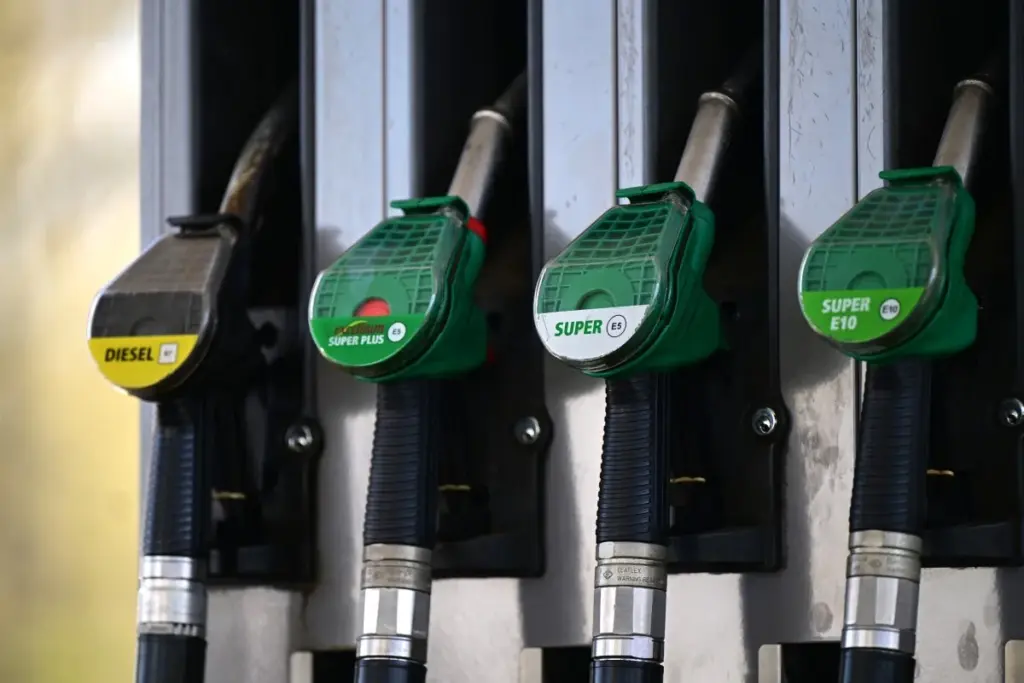
The new reform also proposes eliminating or modifying special tax treatments that exist for fuels and, with this, collect 3.6 trillion pesos in 2027 and, on average, 8.0 trillion pesos from 2028 onwards.
In particular, among the contemplated measures, the initiative proposes increasing the VAT on income for fossil fuel producers of GMC to a rate of 10 percent from January 1, 2027, and taxing it at the general VAT rate from January 1, 2028.
Additionally, the project seeks to eliminate the VAT exemption for tourist services provided to foreign residents and used in Colombia and to make a series of modifications to income tax for natural persons, such as eliminating the dependent benefit from the last reform.
Similarly, it is contemplated to tax both internet-operated games of chance and hybrid vehicles with a general VAT rate of 19 percent. The latter currently have a reduced rate of 5 percent.
3. Higher wealth tax and income changes
Another point of the bill filed by the Government of Gustavo Petro focuses on expanding the tax base for wealth tax. In particular, it proposes reducing the entry threshold from 72,000 UVT to 40,000 UVT, thus reaching 105,332 taxpayers, which is equivalent to 1.7 percent of the total income tax filers.
Likewise, the initiative includes new thresholds for the population with greater wealth, modifying rates and maintaining marginality. Specifically, a rate of 0.5 percent is applied for the threshold from 40,000 UVT to 70,000 UVT, and a threshold of 240,000 UVT to 2,000,000 UVT is created with a rate of 3 percent. From the latter onwards, a marginal rate of 5 percent is set.
In terms of income tax for natural persons, the initiative also proposes increasing the rate for occasional gains from raffles, lotteries, bets, and similar activities to 30 percent, as well as raising the maximum income tax rate for natural persons to 41 percent for taxpayers with incomes exceeding 31,000 UVT.
4. Higher rates for companies:
For companies, the outgoing government’s project proposes equalizing the conditions for applying the income tax surcharge between the coal and oil sectors, including rate convergence.
On the other hand, it seeks to permanently implement a special tax for the oil and coal sector. The idea is to apply a rate of 1 percent to the value in pesos of each export or in case of sale within or from the national territory.

Similarly, it suggests increasing the surcharge on financial institutions, from 5 to 15 additional points above the general rate. Likewise, it proposes to maintain it permanently. With this, it estimates an additional collection of 1.3 trillion pesos in 2027, a figure that would reach about 2.9 trillion pesos in 2030.
5. More taxes on liquors, tobacco, or entertainment
With the aim of reducing negative health externalities, the reform proposes adjusting the VAT rate for liquors to 19 percent (currently 5 percent), as well as taxing all products containing tobacco. In particular, it is proposed to maintain an ad valorem tax of 10 percent for cigarettes in packs or loose, and another of 30 percent on vapes or electronic cigarettes.

Additionally, the Petro government wants to increase the carbon tax rate to 42,000 pesos per ton of CO₂eq, raise the consumption tax from 16 to 19 percent, and impose a 19 percent tax on tickets for entertainment, cultural, and sports services that exceed 500,000 pesos.