


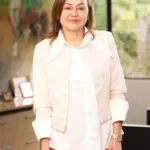

President Abelardo de la Espriella announced this Wednesday, through his X account, the appointment of lawyer Ilva Myriam Hoyos Castañeda as the new Minister of National Education, replacing Viviane Morales, who leaves the position due to what the president described as a “personal situation”.
In his message, the head of state highlighted Hoyos’ character and career as reasons for her appointment, and expressed his confidence that she will carry out the role “with dedication, character, and conviction”. Regarding Morales’ departure, with whom he said he has a friendship, the president thanked her for her work and wished her a prompt resolution of the personal matter that leads her to leave the ministry.
Viviane Morales resigns from the Ministry of Education due to ‘an unexpected family situation’; Ilva Myriam Hoyos will take over the position

Who is Ilva Myriam Hoyos?
Hoyos is a lawyer with a long career in family law, academia, and litigation before high courts, recognized for her closeness to conservative and Catholic positions in public debates on childhood, family, and bioethics.
She is a lawyer from Universidad del Rosario and holds a doctorate in Law from the University of Navarra, Spain. She has been dean of the Faculty of Law and director of the Institute of Humanities at Universidad de La Sabana, an institution where she also worked as a professor and researcher, leading the research group on constitutional reasoning and foundations of law.

Her time at the Public Ministry made her especially visible: as deputy attorney for the Defense of the Rights of Childhood, Adolescence, and Family, she was involved in public clashes with the then Ministry of Education, including a notable altercation with former minister Gina Parody over the School Feeding Program (PAE) crisis. She was also an alternate judge of the Council of State.
Hoyos has been linked to Catholic Church bodies: she was an advisor to the Pontifical Council for the Family, the Latin American Episcopal Council (Celam), and the Episcopal Conference of Colombia; she participated as a lay expert in the V General Conference of the Latin American Episcopate in Aparecida (Brazil) and was an auditor at the Synod of the Family in the Vatican. More recently, she has chaired the National Commission of the Culture of Care.
The context of the replacement
With this appointment, Hoyos becomes the new head of one of the most sensitive ministries in De la Espriella’s cabinet, at a time when the Government has already completed all 18 ministries since the presidential inauguration on August 7. Morales, former attorney general, former senator, and former ambassador of Colombia to France, had assumed the Ministry of Education as part of the president’s original cabinet.

What challenges await her
Below are the biggest challenges and problems the new minister will have to face, according to a diagnosis made by the Community of Observatories and Think Tanks in Education of Colombia.
- Gaps in educational trajectory: one in every two children does not even start their early education process, and among those who do, a significant proportion also fails to complete high school.
- Problems in educational quality: two out of three 10-year-old children in Colombia do not achieve sufficient reading skills or have critical difficulties in reading comprehension.
- Improving PISA test results: according to these tests, at age 15, nearly half of Colombian students do not reach the minimum level necessary to successfully continue their education.
- Differences in performance and completion of educational trajectories: rural students accumulate up to two years of lag compared to their urban peers.
- Strengthening teacher training: ensuring the creation of a robust and articulated system of professional training and development that consistently impacts learning quality.
- Not ignoring that the Colombian educational system is mixed: public education (in the hands of the State) must be strengthened, but decisions that negatively affect private institutions should be avoided (as happened, for example, with the reduction of resources to Icetex).
- Better use of evaluations: that they cease to be merely measurement instruments and become real tools to improve learning.
EDWIN CAICEDO
Environment and Health Journalist
@CaicedoUcros