







Contrary to the cut many expected, the new General Budget of the Nation for 2027—filed this Thursday by the Minister of Finance, Miguel Gómez—grew by 59.3 trillion pesos after its return by the Congress of the Republic.
The total amount went from the 575.6 trillion pesos initially proposed by the administration of Gustavo Petro to 634.9 trillion pesos under the adjustments of the government of Abelardo De La Espriella, representing an increase of 10.3 percent.
In the distribution of resources, the Ministry of Education leads the allocation with 78.77 trillion pesos, closely followed by the Ministry of Health, which will have 77.05 trillion. The Ministry of Labor ranks third with 58.82 trillion pesos.
The lowest amounts will be for the ministries of Culture (706.196 billion pesos), Foreign Affairs (699.681 billion), Science and Technology (342.382 billion), Sports (297.705 billion), ICT (153.182 billion) and Equality (128.120 billion pesos).
Budget of the main entities for 2027:
- Ministry of Education: 78.7 trillion pesos
- Ministry of Health: 77.0 trillion pesos
- Ministry of Labor: 58.8 trillion pesos
- Ministry of Finance: 40.7 trillion pesos
- Ministry of Defense: 33.8 trillion pesos
- National Police: 20.9 trillion pesos
- Colombian Institute of Family Welfare (ICBF): 11.9 trillion pesos
- National Infrastructure Agency (ANI): 10.7 trillion pesos
- Department for Social Prosperity: 8.2 trillion pesos
- Sena: 8.01 trillion pesos
- Attorney General’s Office: 7.06 trillion pesos
- Ministry of Housing, City and Territory: 6.65 trillion pesos
- Invías: 5.89 trillion pesos
- National Civil Registry: 5.72 trillion pesos
- Ministry of Mines and Energy: 5.65 trillion pesos
- Unit for Comprehensive Care and Reparation to Victims: 4.82 trillion pesos
- Civil Aeronautics: 4.04 trillion pesos
- Dian: 3.84 trillion pesos

- Inpec: 2.57 trillion pesos
- Uspec: 2.13 trillion pesos
- Congress of the Republic: 1.42 trillion pesos
- Ministry of the Interior: 1.28 trillion pesos
- Ministry of Commerce, Industry and Tourism: 1.27 trillion pesos
- Presidency of the Republic: 904.047 billion pesos
- Ministry of Agriculture and Rural Development: 891.910 billion pesos
- Unit for Disaster Risk Management (UNGRD): 814.161 billion pesos
- Ministry of Environment and Sustainable Development: 790.261 billion pesos
- Ministry of Cultures, Arts and Knowledge: 706.196 billion pesos
- Ministry of Foreign Affairs: 699.681 billion pesos
- National Planning Department (DNP): 514.132 billion pesos
- Ministry of Transport: 398.736 billion pesos
- Ministry of Science, Technology and Innovation: 342.382 billion pesos
- Ministry of Sports: 297.705 billion pesos
- Ministry of Justice and Law: 179.765 billion pesos
- Ministry of Information and Communications Technologies: 153.182 billion pesos
- Ministry of Equality: 128.120 billion pesos
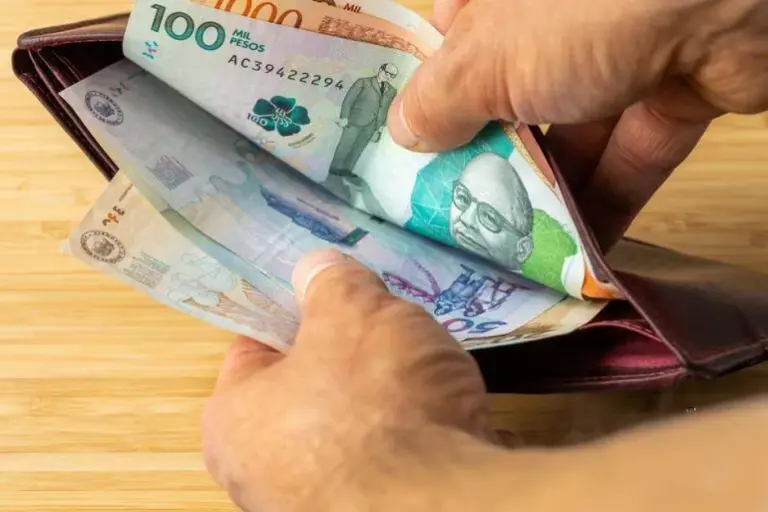
In the comparative analysis regarding this year’s appropriations, the entities that will suffer the largest budget cuts in 2027 are the Ministry of Equality (-60.4 percent), the National Planning Department (-50.3 percent), the Ministry of Mines and Energy (-41.6 percent), the Ministry of Sports (-40 percent), and the Ministry of Environment (-36.3 percent).
On the opposite side, the largest increases are led by the Ministry of ICT (+44.8 percent), the Ministry of Finance (+42.7 percent), the Sena (+25.4 percent), the Ministry of Defense (+21.7 percent), and the Ministry of Housing (+20.4 percent).
Why did the accounts rise for 2027?
The Minister of Finance stated that the current administration, aware of the critical situation of public finances, has made decisions that constitute the first phase of the ‘Economic Rescue Plan’.
As he explained, the strategy seeks to address the unprecedented crisis inherited from the previous government, which was worsened by the effects of the recent earthquake.“We are going to recover the State’s capacity to fulfill its commitments to Colombians and guarantee resources for essential obligations,” he said.
In this regard, the official stated that the new budget corrects the irregularities of the proposal presented by the administration of Gustavo Petro, which — he assured — left key sectors underfunded such as health, pensions, public universities, regional elections, and energy and gas subsidies, among others.

To reverse this situation, the budget bill not only allocates the necessary funds to cover such commitments, but also incorporates strict austerity measures, adjusting bureaucratic expenses to the rate of inflation after “years of waste“.
The minister Miguel Gómez also announced that the Executive will file before the Congress of the Republic the so-called ‘Rescue Law’, a legislative package designed to contain in the short term the rapid growth of public spending and “the debt explosion that threatens the future of the economy“ of the country.
“We are aware that these measures require sacrifices, but ordering public finances is essential to provide what people need today and guarantee it in the future,” he added.
How will the budget be financed?
The budget financing will be mainly supported by current revenues of the Nation, which increased from 309.8 trillion pesos in the previous proposal to 315 trillion pesos in the new project formulated by the government of Abelardo De La Espriella.
Additionally, capital resources will contribute 281.3 trillion pesos, a considerably higher amount compared to the 181.2 trillion pesos proposed by the administration of Gustavo Petro.

The bill also details that most of the resources will be allocated to operations. For this item, 392.5 trillion pesos are proposed, compared to the 365.8 trillion assigned in 2026.
Within this concept, the largest allocation corresponds to transfers, which will total 297.5 trillion pesos. Likewise, a personnel expense of 72.2 trillion pesos, acquisition of goods for 17.8 trillion pesos, and late payment interest of 1.3 trillion pesos are proposed.
Regarding debt service, there is an increase of 55.4 trillion pesos: it will go from 100.4 trillion pesos in 2026 to 155.4 trillion pesos in 2027. Just in interest payments, a jump from 68.7 trillion to 94.4 trillion pesos is projected.
Finally, investment consolidates as the most impacted item. While 89.4 trillion pesos were approved for 2026, the figure for next year was reduced to 86.9 trillion pesos.