








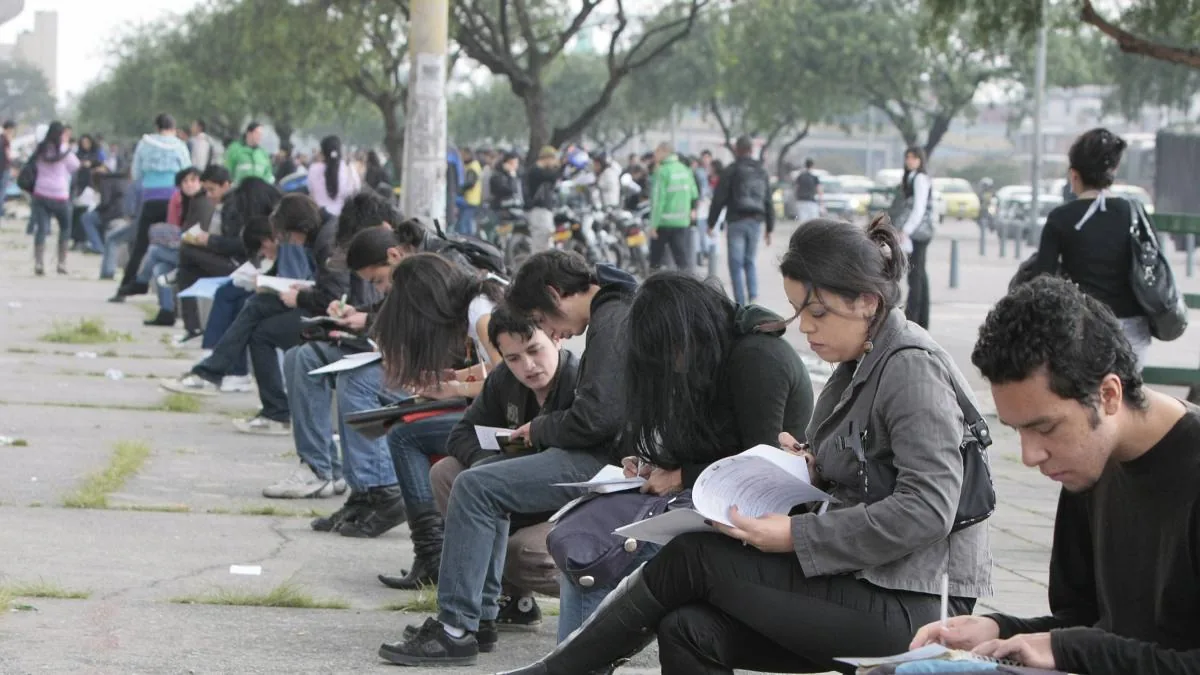
The unemployment rate in Colombia for the sixth month of the year stood at 8 percent, slightly below the record for the same period in 2025, when it was 8.6 percent, while completing two consecutive months at the same level, according to the report by the National Administrative Department of Statistics (Dane). The seasonally adjusted unemployment rate — which removes the effects typical of the time of year to show the real trend of the labor market — stood at 8.2 percent in June, one tenth above the 8.1 percent recorded in May.
According to the information revealed by the official entity, in June the labor market in Colombia showed a shift in the sectors driving hiring and, for the first time in several periods, activities related to consumption and private services led job creation.
Indeed, in the sixth month of this year, the country added 706,000 new employed compared to June 2025, reaching 24.46 million people employed, which allowed the unemployment rate to drop 0.6 percentage points in the last year, while the employment rate rose from 58.4 to 59.4 percent and the overall participation rate from 63.9 to 64.5 percent, reflecting that more people went out to look for work and, at the same time, a higher proportion managed to find it.
Despite these advances, the quality of employment continues to be one of the main challenges of the labor market. Although the country generated 706,000 new employed in the last year, 391,000 of those jobs corresponded to informal employment, while 314,000 were formal.
Thus, the number of informal workers rose to 13.47 million people, equivalent to 55.1 percent of the employed, a proportion almost stable compared to the 55 percent observed a year earlier.
In the 13 main cities and metropolitan areas, on the contrary, informality decreased from 42.1 to 41 percent, reflecting a more evident improvement in the main urban centers, according to Dane.

Likewise, Dane’s figures also reveal that despite the progress observed in June, the country still records 2.14 million unemployed people, while 14.61 million Colombians remain outside the labor force, that is, they neither have a job nor are actively looking for one.
The drivers
The activity of accommodation and food services was the one that contributed the most to job creation during the last year, with 289,000 new employed, followed by construction with 146,000, transport and storage with 145,000, among the most outstanding.
Job creation in the sixth month of 2026 was different from that observed in previous months, when public employment was the main driver of labor recovery. Now sectors linked to tourism, gastronomy, mobility, and construction assume that role, a sign that part of the dynamism comes again from private activities.

However, the labor market still shows areas of weakness. The largest job reductions were concentrated in trade and vehicle repair, with 125,000 fewer employed, followed by manufacturing industries, also with a decrease close to 125,000 workers, among the most notable on that front.
This behavior suggests that, although employment continues to grow, the momentum is not homogeneous among the different sectors of the economy and difficulties persist in traditionally labor-intensive activities.
The gaps
Another highlighted result of the Dane report is the greater protagonism of women in the labor market recovery. Of the 706,000 new jobs created between June 2025 and June 2026, 544,000 were occupied by women, while men contributed 162,000 new employed. In other words, about eight out of ten new jobs corresponded to the female population.
In total, employed women rose from 9.89 million to 10.44 million, an annual growth of 5.5 percent, higher than that observed among men, whose employment increased by 1.2 percent. Still, significant differences persist in the labor market, since the female unemployment rate was 9.9 percent, compared to 6.6 percent for men, leaving a gap of 3.3 percentage points.
The recovery also had a generational component. The number of employed between 25 and 54 years increased by 459,000 people, while among those aged 55 and over the increase was 167,000. In the group aged 15 to 24 years, 80,000 additional jobs were generated, although this result was explained by young women, since among men in that age range employment decreased.
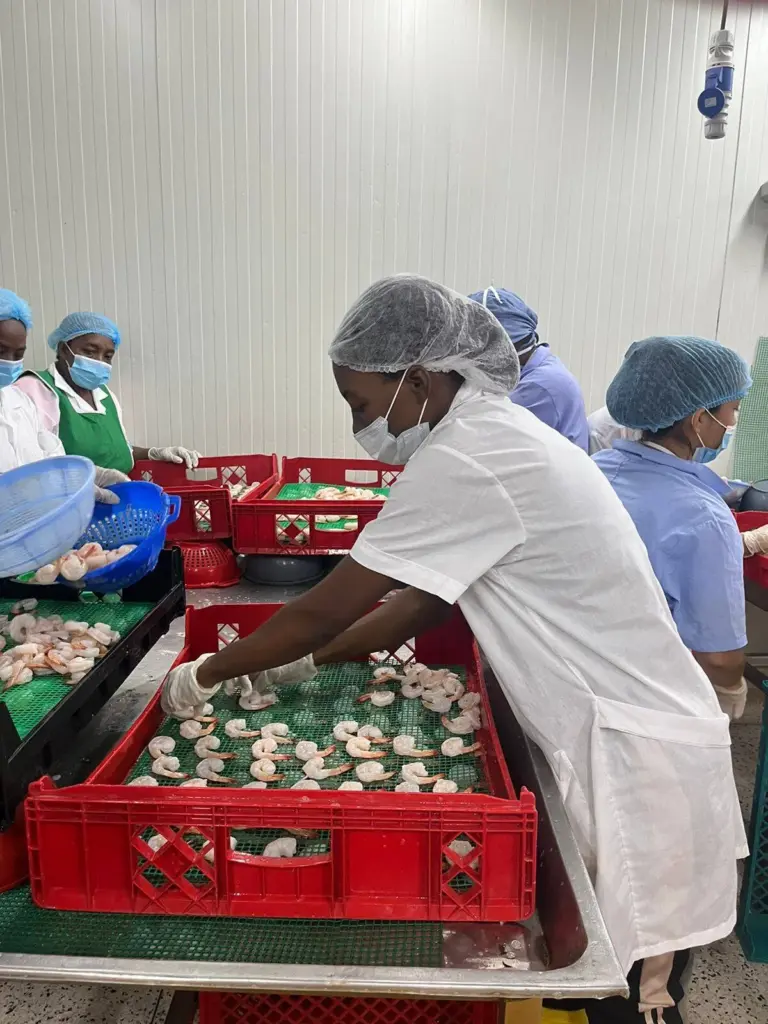
It was also reflected in the form of worker affiliation. The largest increase occurred among laborers and private employees, who added 437,000 new employed compared to June 2025, consolidating as the main source of job creation.
They were followed by self-employed workers, with 414,000 additional people, for a total of 10.1 million, meaning that four out of ten employed continue working independently, according to the statistical entity’s figures.
The regions
Geographically, employment growth was also not uniform. The other municipal seats were the ones that contributed the most to the increase in employment, with a growth of 6 percent, followed by populated centers and dispersed rural areas, while the 13 main cities and metropolitan areas advanced barely 0.8% compared to the same month of the previous year.
The decrease in unemployment was also mainly driven by the other municipal seats, whose rate fell from 10.6 to 8.7 percent, while in the 13 main metropolitan areas it went from 8.3 to 8 percent. In contrast, in populated centers and dispersed rural areas unemployment increased from 5.8 to 6.7 percent, although it remains below the national average, the official entity’s report specifies.
In the main cities, the outlook also showed significant differences. In the moving quarter April-June 2026, Quibdó registered the highest unemployment rate in the country with 25.1 percent, followed by Riohacha (15.3 percent) and Sincelejo (14.6 percent).
At the other end were Medellín and its metropolitan area (7.1 percent), Pereira and its metropolitan area (7.2 percent), and Villavicencio (7.9 percent), which presented the lowest unemployment levels among the 23 main cities and metropolitan areas.